
First Take: Live Foods
In 2026, the market for live feeder crickets is experiencing strong demand, driven by reptiles, exotic pets and the push for sustainable protein sources. Live crickets remain a significant part of the pet food and bait market, with an unending demand for live feed from pet stores and individuals. Pet owners, particularly Millennials and Gen X, are willing to pay a premium for products that offer clear environmental benefits and ingredient transparency.
With the overall shift towards processed protein, live feeders have been trending hot. According to media research, the fastest-growing segment in the overall insect market is processed insect protein for use in wet and dry pet foods. This trend is driven by consumer acceptance of insect-based ingredients as sustainable and nutritious, as well as innovations in processing that enable nutrients to be retained and maintain shelf stability.
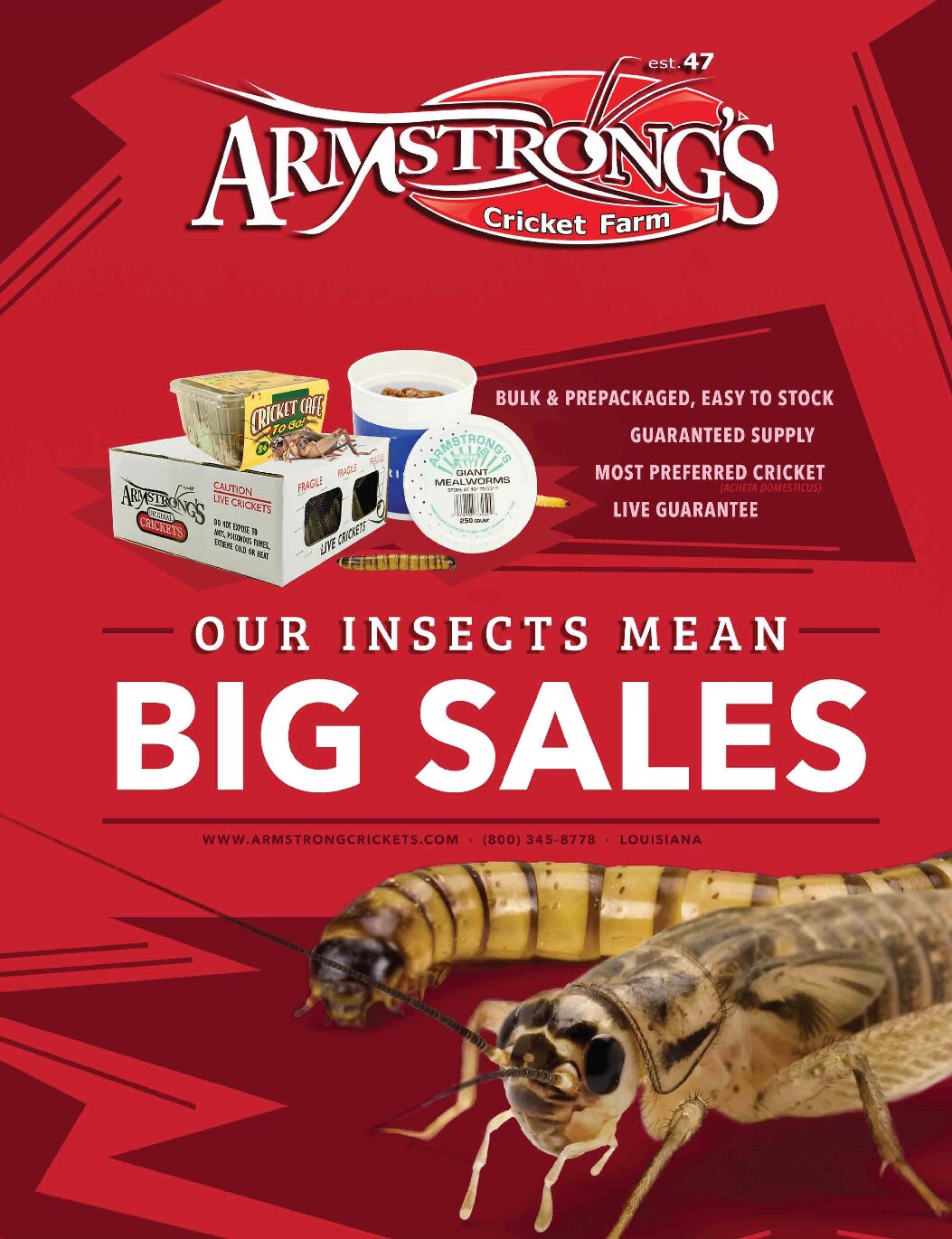
For Brandon Armstrong, owner of Armstrong’s Cricket Farm, the top strategic goal for 2026 remains the same as it has always been: “to give our customers the best quality feeders and service at a fair price.” Armstrong’s has been delivering a legacy of quality crickets, mealworms, superworms, hornworms, and more since 1947.
Armstrong shared in an earlier interview, “Service, quality, and dependability are the major factors that set Armstrong’s Cricket Farm apart from all the others. Our ability to adapt to a customer’s specific needs, and knowing that if something is wrong, we are going to make it right.”
He continued. “As a family-run business, now in its fifth generation, we’re not just selling bugs; we’re delivering confidence that your pet’s eating the best.”
Bassett’s Cricket Ranch opened in 1969, selling live feeder crickets online to reptile enthusiasts, fishermen, as well as retail establishments. What started out as a small business has now grown, with Bassett’s cricket knowledge even being featured in The New York Times.
The New York Times article reported, “Millions of crickets are shipped across the country every week, and suppliers must guarantee that they will be alive on arrival. ‘It is very important that they are alive,’ said Russ Bassett, who, with his brother, John, owns the Bassett Cricket Ranch in Visalia, CA. ‘If they die, it is our responsibility to replace them. Most animals wish to sense movement.’ Mr. Bassett ships 100,000 crickets at a time, driving to airports in Los Angeles or San Francisco three times a week. To make sure the bugs are not cooked on the tarmac on summer days, he uses boxes with ventilated screens and cold packs.”
Ghann’s Cricket Farm has been a tradition in quality feeder insects for over 73 years. In a previous media interview, Clay Ghann, owner of Ghann’s Cricket Farm in Augusta, GA, says he prefers ”to take the high road in the bug market, and our customers are willing to pay more to get the best quality.” During the pandemic, the farm changed hands to Scott Martin, who will carry on the next generation of Ghann’s legacy. According to the website, Scott Martin says the legacy is “providing a great place to work for all of our current and future employees and offering the highest quality of live feeder insects for pets.”
According to market data, the global cricket farming market size was valued at USD 90.9 million in 2025. It is projected to reach USD 99.3 million in 2026. This increase is due to the growing awareness of the sustainability benefits of cricket farming, which uses 75 percent less water and approximately 80 percent less feed compared to traditional livestock. And that’s good news for Armstrong’s Cricket Farm. Armstrong reported feeling very optimistic about the year ahead. He hinted, “We are offering new products that people have been asking us to carry for years. More news to come.”
He also stated previously that local is a big driver of pet parents’ shopping choices. “Your locally owned store is going to have better knowledge, and they are going to have better products when it comes to your animal’s needs. If you have certain needs and Armstrong’s Cricket Farm is serving them, we can help to accommodate your needs.”
He also relayed how they blend local with on-demand delivery, “We’re thrilled to have started selling our crickets directly to pet owners through online platforms like Chewy.com, Amazon, and our own ArmstrongCrickets.com. It’s been a game-changer, making it easier for folks to get our high-quality crickets right to their door for their reptiles or amphibians.”
Many farms are noticing the need for crickets. According to a previous interview with CBC, “Hillier, a graduate of Dalhousie University’s agriculture school and president of Midgard Insect Farm Inc., is raising crickets after spotting a gap in the market. Companies are increasingly seeking out the protein-rich insect for their products, but there aren’t many people growing them. Enter Hillier, whose company has partnered with pet food producer Dockside Pet Products of Ontario. While Midgard is focused solely on the pet food industry at this point, Hillier believes the human market may grow in the future. ‘In the meantime, all of our crickets are raised to be safe for human consumption, so we’re following all the best practices and guidelines, if we ever were to go that route.’”
Timberline Live Pet Foods is known for “Vita-Bugs,” using special feeding for higher nutrients with live delivery. They are based in St. Louis and are one of the largest suppliers of crickets, mealworms and fruit wax worms—shipping more than a billion live insects every year. Timberline has been leading the category with innovation, launching pre-packaged products, feeder insect nutrients, and scientifically tested, nutrient-dense products like Vita-Bugs.
Staying relevant in this market is key. Armstrong of Armstrong’s Cricket Farm shared how, “Listening to customers and noticing trends helps to ensure you are staying with the times. I believe there will be a lot of growth in herpetology in the coming years. Consumers are educated and will seek out live foods of the highest quality. Online vendors are making this easier by the day.”
Sustainable, nutrient-rich protein for pets, the live feeder category continues to be one that is fast-growing, with an insatiable demand.