
Category Analysis: Dog Treats
The dog treat category continues to see a focus on transparency and human-grade ingredients. Just as pet owners are careful about what they put into their own bodies, they want the same for their pets. Pet parents are looking for functional ingredients that will help their dog’s wellness—soothing their gut, their nerves, and joints.
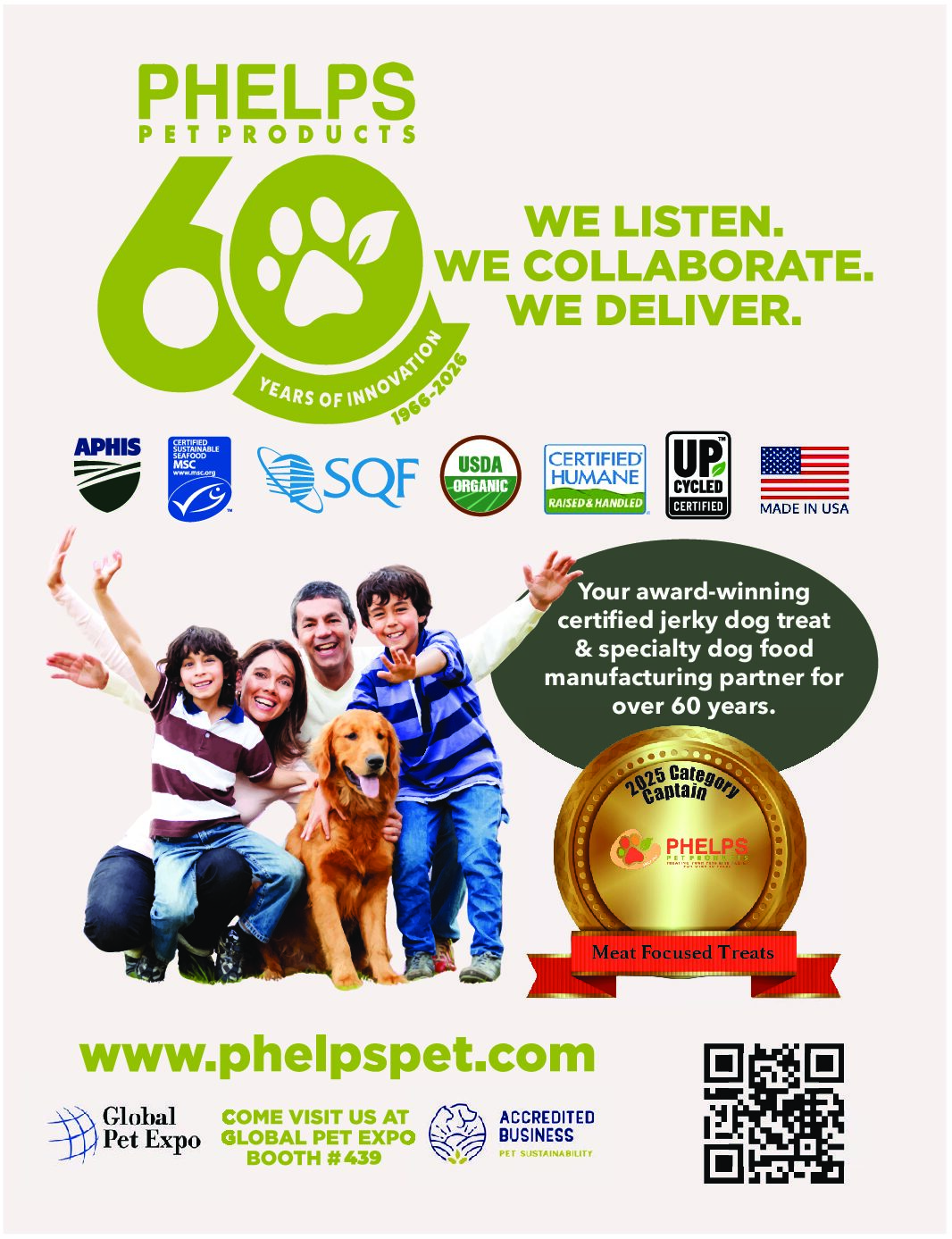
Phelps Pet, which is celebrating its 60th year in 2026, has been ready for the category’s embrace of clean-label and organic. Rick Ruffolo, President & CEO of Phelps, reported previously, “Phelps’ investments over the last decade in people, equipment, processes, and innovative products have enabled us to partner with our customers to create customized clean-label jerky dog treats and specialty air-dried dog food using the widest selection of protein sources, shapes, and product claims in the market.”
Owners having more healthy knowledge about dogs is what Mark Pasco, Vice President of Sales of Walk About Pet & The Wild Bone Company brands, thinks is driving this category. “They are looking for more health-conscious treats, and we are able to continue delivering what they want,” Pasco explained. “Our brand is unique in the fact that all of our treats are healthy right out of the bag.”
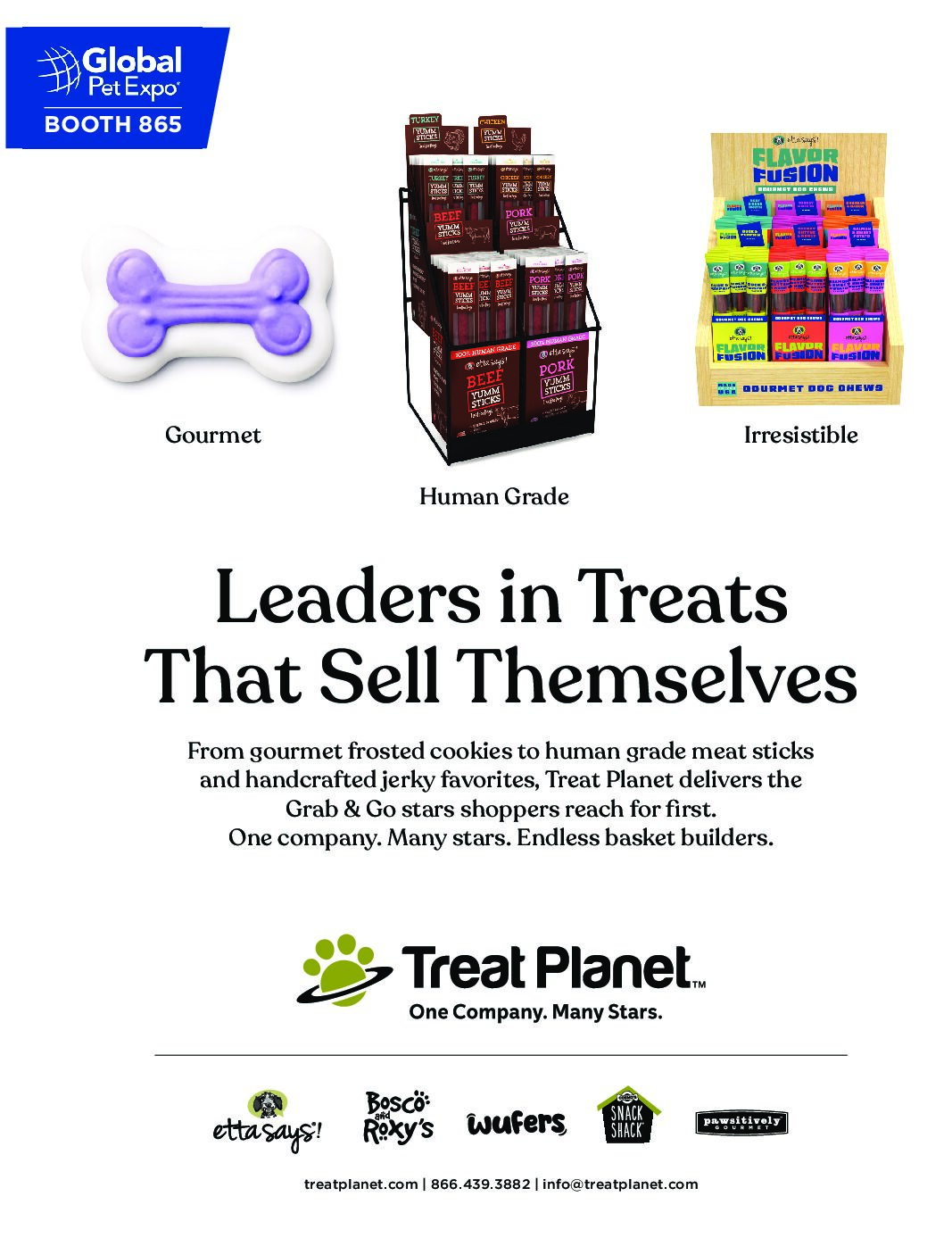
Doug Martin, Founder of Treat Planet, which acquired premium baked dog treat maker Bosco & Roxy’s in 2025, said, “We look at human trends a lot because the dog treat category does follow them. If you look at the protein trend, for example, you know everything you see talks about the number of grams of protein in it. We are actually developing lines of products that will highlight protein levels. Collagen is a big driver for skin and coat. So, we’re going to have new collagen-based products. We’ve got some cool R&D in the pipeline that we hope to be able to talk about at SUPERZOO this year.”
While protein and healthy ingredients are shaping product development, the category is also being driven by sustainability and sourcing standards. The continued development of a clearly defined, healthy, sustainable treats category is key for the category, affirmed Dean Triandafellos, CEO of ROAM Pets. “Pet parents are increasingly moving away from rawhide, industrially farmed proteins, and low-quality mass-produced treats. They are more educated, more ingredient-aware, and more environmentally conscious than ever before. As an industry, we must respond with products that address health concerns like allergies and weight management, while also supporting sustainable sourcing practices. The brands that succeed will be those that align with these evolving consumer values.”
Snif-Snax was founded on one simple belief: dogs deserve the same quality food we serve our families. “Pet parents are increasingly drawn to treats that highlight the natural qualities of fish rather than trying to disguise them. Smoked, crispy salmon skins are a good example of that shift. They are simple, functional, and clearly different from traditional soft or heavily processed treats. I expect more brands to lean into this direction: fewer ingredients, clearer processes, and less unnecessary complexity,” relayed Casey Perkal, Director of Ecommerce Snif-Snax.
But even as ingredient quality improves, deeper structural health challenges within the category remain unresolved. Joseph Roetheli, CEO of Pets Best Life, manufacturer of Yummy Combs, speaks as an ambassador for the dogs from his more than 30 years of experience in the business, when he outlined three long-term challenges that the pet treat category needs to address.
He writes from a pup’s perspective: “Gum disease remains the No. 1 disease among us, 89.7 million U.S. dogs, even after knowing that these three issues have been problems for more than 30 years.”
He continued from a dog’s point of view, “Deterring obesity/excess weight. Studies verify that approximately 55 percent of dogs over the age of two years old are overweight, but only 20 percent of our owners acknowledge that we are overweight.” The last issue pointed out from a pup’s perspective was deterring gulping and obstructions. “My pals and I are noted for gulping food and treats. Gulping treats can result in choking and bowel obstructions.”
It should come as no surprise that Yummy Combs’ top strategic focus is to make progress on these three big category issues. Roetheli relayed, “Yummy Combs have validated solutions to these problems with five patents/pending, 21 ‘category firsts’, and over 60 benefits.” Currently, pet parents can look to their Longevity15—a patented, nutrient-dense dental treat designed for dogs to improve oral health while supporting long-term, cellular-level wellness. Or to Yummy Combs’ patented, revolutionary “shape that makes the difference.”
Dental innovation isn’t isolated to one brand. Another company focusing on how oral health is delivered in treat form is Targeted PetCare. “Dog parents have been begging for better treats, and we’ve been listening,” Megan Raney, Director of Marketing for Targeted PetCare, stated. “We’re excited to introduce Chewsday to pet parents everywhere and bring fresh thinking, real innovation, and excitement back to the dog treat category. Chewsday’s cutting-edge line of dental chews uses enzyme and betaine technology to deliver an advanced clean.”
She explained, “We’re experts in canine nutrition and dental health, but first and foremost, we’re devoted dog lovers. Every Chewsday product is thoughtfully crafted with your dog’s well-being in mind—physical, mental, and emotional. And even better, Chewsday has an attainable price point to keep dog parents coming back for more!”
Other hurdles for the category? “The biggest challenge is introducing products that truly grow the basket rather than simply swapping one item for another,” affirmed Triandafellos of ROAM Pets. “Incremental innovation—like changing flavor or size—doesn’t meaningfully expand the category. Real innovation must attract pet parents back into the treat aisle with confidence. Today’s consumer is buying super-premium food but often hesitates to add a treat or chew because of concerns about ingredients, sourcing, or sustainability. The opportunity lies in creating products that align with their values—healthy, responsibly sourced, and purpose-driven—so they feel good about adding them to their basket.”
Beyond innovation strategy, rising costs and economic pressures were challenges many dog treat companies brought up, and for Lance Yamazaki, Owner of Pacific 21 Mercantile, it was also top of mind. “The key challenge for the category is the rising production costs. The category has also become really crowded, and this is making it difficult to differentiate in a saturated market. But for us, our focus is to maintain our identity as a high-quality, 100 percent natural, single-ingredient treat.”
Ruffolo of Phelps reminded leaders, “The key word everyone needs to keep in mind during 2026 is ‘value’. Your brand/business will no longer be relevant if consumers decide you don’t offer some type of value in their lives. What problem are you helping consumers solve? What enjoyment are you bringing to the pet/pet parent relationship?”
The dog treat market also faces challenges when new ideas are introduced. Dan Nagy, VP of Sales for Loving Pets, explained, “When it comes to pet health, lifestyle and wellness, trends from the human food industry regularly influence the pet market, but the industry may not be ready or feel like their customers are receptive and ready for every trend, and in addition, manufacturing regulations may lag behind. For instance, in the current climate, inserting and promoting protein is one trend we see everywhere, but regulatory issues include products that incorporate and focus on collagen or CBD. Loving Pets always wants to understand and deliver affordable, high-quality products that pet parents feel great about for their pet. We are always looking to anticipate trends, but we balance that with award-winning experience and manufacturing capabilities to ensure that the products we deliver check all of the boxes—for regulatory, for our retailer customers and buyers, and for pets and pet parents too.”
Balancing innovation with accessibility is what Juan Reynal, Beefeaters, COO, pointed out as a major challenge. “In recent years, the category has seen significant premiumization—with new ingredients, elevated claims, and higher price points driving attention. While innovation is important, this shift has also created a gap for everyday pet owners who are increasingly price-sensitive but still expect quality and transparency.”
He continued, “Another challenge is avoiding trend-driven volatility. Rapid innovation cycles can create short-term excitement, but they may also introduce complexity for retailers, pressure supply chains, and fragment shelf space. Sustainable growth in the category requires disciplined expansion—not just novelty. Fresh thinking in dog treats today means reimagining value: delivering recognizable ingredients, responsible sourcing, and new protein options such as salmon or other single-ingredient chew, while maintaining price points that allow broad consumer participation. It also means designing assortments that are scalable, operationally reliable, and supportive of retailer margin.”
Many dog treat companies are expanding in bold new ways. Phelps is going beyond the food bowl to the water dish by helping dogs stay hydrated anytime, anywhere. Ruffolo revealed, “We are most excited about some advancements we are pursuing in addressing pet ‘hydration’—which is a key unlock to better health for pets, humans, and frankly, all organisms. Hydration is one of the key building blocks of life—for survival, recovery, and growth. Most any aspect of pet health is enhanced or improved through better hydration, and yet, it often is an overlooked aspect of pet care. Simply having a bowl of clean water is a good first step, but this often is not sufficient, and helping address the hydration gap is where we you will see innovation from Phelps starting with our new H2GO! hydration gel product that will be launching under the Phelps Wellness Collection later in 2026.”
“ROAM was founded on innovation,” said Triandafellos. “Over the past seven years, we’ve helped create an entirely new subcategory within treats and chews—something the industry hadn’t seen in decades. Going forward, innovation must move beyond cosmetic changes like new colors, shapes, or minor flavor extensions. Manufacturers need to think about solving real challenges pet parents face—whether that’s weight management, food sensitivities, sustainability concerns, or ingredient transparency. We don’t follow innovation—we help define it. Our direction remains focused on meaningful category expansion, not incremental line extensions.”
ROAM helped to pioneer the novel and exotic protein category. Triandafellos disclosed, “We travel the world to procure truly free-range, sustainable proteins that are good for pets, people, and the planet. Today, we offer the industry’s largest selection of proteins, including ostrich, venison, kangaroo, goat, wild boar, and crocodile. We will continue expanding access to these responsibly sourced, high-quality proteins and bringing innovative formats to market.”
For Snif-Snax, that means following consumer-led innovation to embrace new avenues. “We’re looking closely at how pet parents actually use and think about fish-based treats and extending what we already do well into new formats that make sense for pet parents. Everything we make starts with real salmon, not meals. That commitment sets a high bar for us, and it shapes how we decide what is worth bringing to market,” discussed Perkal of Snif-Snax.
For other brands, innovation is as much about disciplined scaling as it is new products. Beefeaters will be focusing on national expansion while preserving value leadership and operational reliability. Reynal of Beefeaters commented, “As we continue to grow across grocery and mass retail channels, our priority is scaling responsibly— strengthening distribution, deepening retailer partnerships, and supporting consistent category performance. We are focused on expanding our Jerky Dog Treats and Lickables Cat Treats lines into additional doors while maintaining the pricing accessibility that defines our brand, with most of our grocery assortment retailing under 10 dollars.”
He continued, “A second pillar of our 2026 strategy is thoughtful innovation. This includes expanding protein variety, such as salmon-based offerings, and continuing to introduce fruit- and vegetable-based treats that reflect consumer preferences—without compromising affordability or supply stability.”
But for one brand, innovation isn’t just about dog treats (although they are launching a really fun nostalgic frozen yogurt that’s an interactive owner/pooch pop-up treat) but innovation is also how they’re helping retailers display them.
Martin of Treat Planet revealed, “A big strategic focus for us is effective merchandising. We’ve done a lot of big display refreshes this year with many of our core customers. We’ve launched some new displays that go on the counter. No one’s ever done a small, frosted cookie display that’s more of an impulse display that you could put on a checkout counter. At Global Pet Expo this year, we have a whole new set of displays that are more mobile and smaller, allowing consumers to find that extra impulse around a celebration.”
Not every company defines innovation as disruption. For some, innovation means sticking closely to what you know already works for your customers. Pasco noted, “We will stay in our lane with both brands—Walk About Pet & The Wild Bone Company by using our proprietary mix of unique and highly nutritious proteins coupled with farm fresh fruits and vegetables to produce every product—one at a time, so continue asking for them by name!”
“At Loving Pets, our primary strategic focus for 2026 remains consistent with previous years: continuously enhancing our manufacturing to offer affordable, solution-based products made with higher quality ingredients for pet parents,” replied Nagy. He also hinted at something new on the horizon. “Our focus for the upcoming year is a new technology that will be highly distinctive in the dog treat market, representing our innovation path.”
Innovation for some companies might come in the form of adding various nutrients, but for Yamazaki of Pacific 21 Mercantile and their all-natural treats, they will “Stay the course as a minimally processed treat (that’s just dried) and keep ingredients as close to their natural state as possible.”
Yummy Combs innovation will be around reducing incident rates related to oral care, obesity/excess weight, and obstructions—the three challenges they named as the most prominent hurdles faced in the dog treat category today. And they implore that others in the category help too.
Whether companies focus on ingredient transparency, responsible sourcing or value, there is one clear mission that rises above the rest and unites the category: protecting the health and wellbeing of our 89.7 million best friends.
Inside
Category Analysis: Feline Merchandising
Category Analysis: Freeze-Dried Merchandising
Category Analysis: Health and Wellness
Category Analysis: Interactive Dog Toys
Category Analysis: Omega-3 Supplements
Category Analysis: LID Premium Foods
Special Report: Global Pet Expo Preview
Q&A Interview with Mike Karsting, Senior Vice President of the World Pet Association