First Take: Litter
The cat litter category is entering 2026 with renewed momentum, driven by rising cat ownership, premiumization and a consumer base that is increasingly prioritizing both performance and sustainability. As nearly 49 million US households now include cats, according to the American Pet Products Association, industry leaders are betting on innovation, transparency and strategic retail partnerships to capture their share of the market’s projected growth.
That growth is expected to be substantial, with estimates suggesting the global cat litter market could expand from about $14 billion in 2025 to over $22 billion by 2035. This growth trajectory reflects both the increasing pet parent population and an important shift in how consumers approach litter purchasing decisions.
While price is of course critical in an uncertain economy, cat litter has managed to largely avoid the cutbacks seen in other non-essential pet categories, bolstering the category’s future.
“Cat parents are no longer choosing litter based on price alone,” said Josh Wiesenfeld, Boxiecat Founder and CEO. “They’re looking for products that actually make life easier with better odor control, less tracking, and simpler cleanup. Brands that can tell that story clearly and show results are the ones that will keep pet parents coming back.”
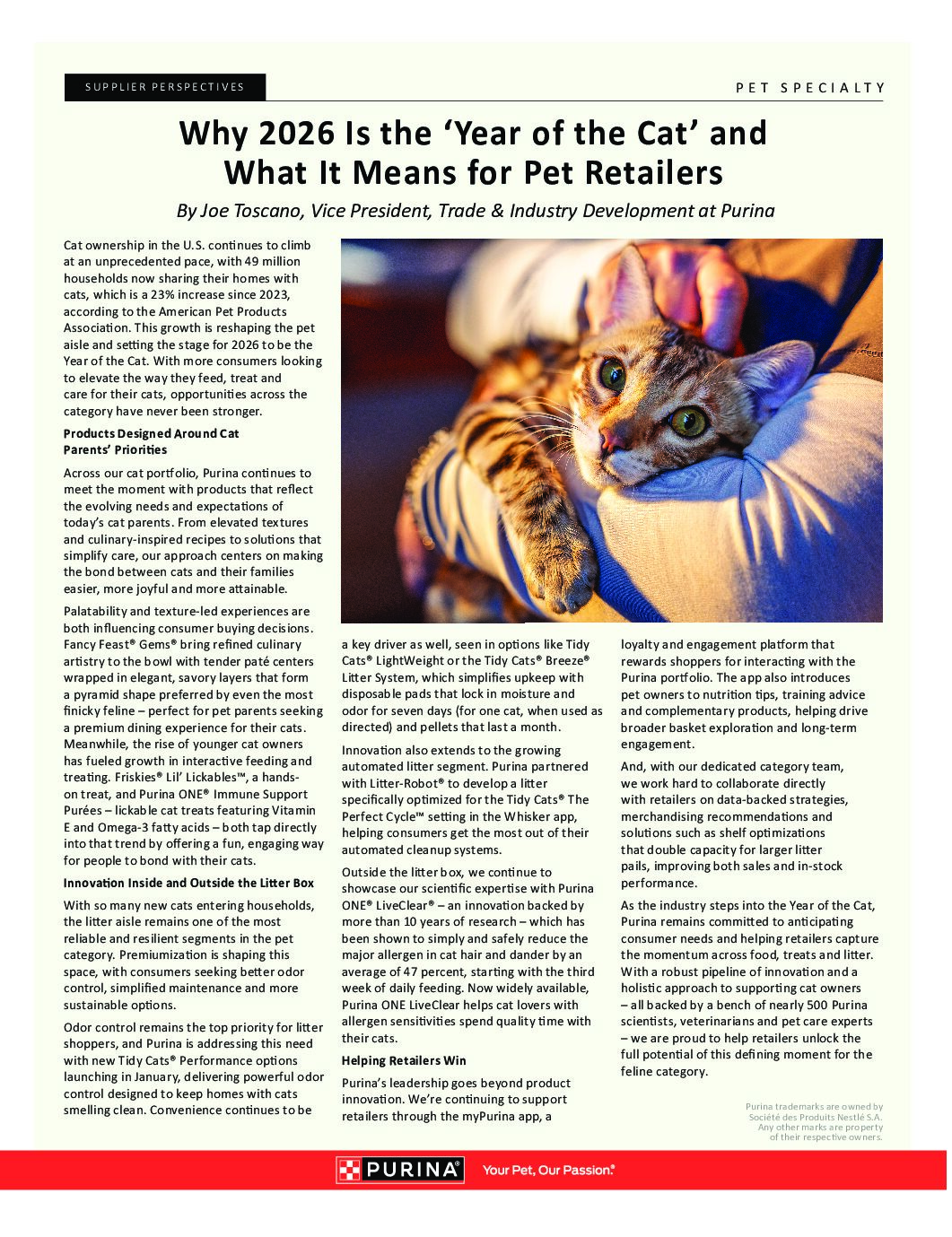
Joe Toscano, vice president of trade and industry development at Purina, identified premiumization as one of the biggest trends shaping the category. “As cat ownership continues to accelerate—making 2026 truly the ‘year of the cat’—more consumers are trading up for litter products that offer meaningful performance upgrades,” he said. While odor control remains the top priority, Toscano noted strong momentum behind low-tracking options, lightweight formats and alternative systems like Purina’s Breeze Litter System.
This premiumization trend aligns with broader health and wellness movements in the pet care industry, with consumers increasingly making their purchasing decisions through the lens of quality of life for both pets and household members. Alongside litter, this trend has impacted the pet food, toys, and services categories. Mat Brost, marketing director for Dr. Elsey’s, said he expects this to be critical in 2026. “The most important trend is the continued shift toward unscented, health-focused litter—and, just as importantly, educating cat owners on why it matters. For years, litter innovation has been driven by what appeals to people, not what supports the cat. We’re seeing that change,” Brost said. “Scented litters may seem attractive to owners, but they can contribute to stress, avoidance, and ultimately house-soiling issues. Leaders who succeed will be the ones who put feline well-being first and help retailers communicate that unscented litter isn’t a compromise—it’s a better solution for the cat.”

Environmental consciousness is also at top of mind for many cat owners. Sustainability has moved from niche concern to mainstream expectation, with pet parents desiring eco-friendly options that don’t sacrifice performance. As a result, the natural litter segment has continued to gain traction as consumers think more holistically about the products they bring into their homes.
“Pet parents have come to expect sustainability without compromised performance,” said Janice Yamamoto, director of marketing at Next Gen Pet. “Eco-friendly products that deliver strong odor control, clumping, and convenience—and come from brands with real, transparent environmental impact—are best positioned to earn long-term loyalty.”
John Harrington, marketing director at Naturally Fresh, emphasized that today’s consumers are prioritizing not only their cat’s health and comfort but also the environmental impact of their choices. “This includes greater interest in renewable materials, responsible sourcing, and reduced waste across the full product lifecycle,” he said. The sustainability push extends beyond the product itself to packaging innovations. Naturally Fresh is rolling out refreshed packaging across its portfolio in 2026, featuring a cleaner look, Velcro resealable bags for improved functionality, and recyclable materials that simplify responsible disposal. “This relaunch allows us to strengthen our shelf presence, enhance the consumer experience, and reinforce our commitment to sustainability,” Harrington said.
For Boxiecat, 2026 centers on deepening leadership in performance litter while expanding its role as a trusted partner to both consumers and retailers. “This includes continued innovation in solutions, strengthening vet-backed credibility, and scaling education that helps consumers understand how the right litter can improve both cat health and household life,” Wiesenfeld said.
Purina is taking a dual approach, focusing on leading innovation while helping retailers capitalize on record cat ownership levels. The company is investing in products that elevate daily cat care experiences and expanding tools like the myPurina app to help retailers deepen loyalty and increase basket size. “We’re bringing all of this to our retail partners with our dedicated category team that shares insights and data and creates tailored actions for retailers to help move the category forward,” Toscano said.
Next Gen Pet is concentrating on expanding distribution through values-aligned retail and distribution partners. “Growing our network allows us to reach more pet parents while maintaining the integrity and performance standards that define our brand,” Yamamoto said.
Dr. Elsey’s is similarly focused on expansion for both their litter and cat food lines. “We’re focused on broadening access by supporting more independent retailers and regional distributors, ensuring that evidence-based, feline-first solutions are easier to find in neighborhood pet stores across the country,” Brost said.
Despite economic uncertainties and competitive pressures, industry leaders expressed confidence about the category’s trajectory, citing engaged consumers and sustained pet ownership growth as key drivers.
“We’re most optimistic about how engaged and informed today’s cat parents have become,” Wiesenfeld said. “They’re actively seeking better solutions and are open to trying new products that deliver real results. This creates an opportunity for brands like Boxie—where performance, innovation, and transparency are core—to build long-term trust rather than one-time trial.”
Toscano echoed this optimism, pointing to the sustained rise in cat ownership. “This growth brings new opportunities for innovation, stronger retail partnerships and more ways to support pet owners with products and solutions that can help improve life with cats,” he said.
Yamamoto highlighted the shift toward more conscious pet care choices as a source of optimism. “Consumers are more conscientious and intentional, which creates meaningful opportunities for brands that lead with purpose, innovation, and trust,” she said.
Brost is feeling optimistic on two fronts: the growing sophistication of the independent pet channel and increasing consumer awareness around feline health. “Specialty retailers are asking better questions and looking for products that solve real problems, not just incremental line extensions. As education around stress, litter box behavior, and unscented litter continues to grow, it creates meaningful opportunities for specialty stores to differentiate themselves with products that truly support cats. In turn, this builds greater trust and loyalty with their customers.”
For Naturally Fresh, momentum from a strong 2025 has positioned the brand well for continued growth. “We see meaningful opportunities to build on that success by expanding awareness, deepening loyalty with existing consumers, and continuing to meet the evolving expectations of modern pet parents,” Harrington said.
As those expectations evolve, the retailers agreed that staying relevant in the litter category requires striking a balance—addressing real consumer pain points while also providing value to retail partners.
“Relevance will come from clarity, differentiation, and education,” Wiesenfeld said. “Retailers want brands that simplify the shelf and drive repeat purchase, while pet parents want products that clearly solve their specific pain points. Brands that help retailers tell a clear story and help consumers quickly understand the value will stand out.”
Brost agreed, and said that relevance comes from clear education, honest performance, and strong partnerships with pet specialty retailers. “Companies need to help stores tell a simple, credible story: why litter matters to feline health, and how better choices can prevent common behavior issues.”
However, he said that in 2026, opportunity isn’t about being everywhere. “It’s about being in the right stores, supported by distributors who understand the specialty channel. Brands that invest in retailer education, category clarity, and consistent product performance will earn space and loyalty as the category evolves,” he said.
Toscano emphasized the importance of solving consumer problems around odor control, convenience and sustainability while making things easier for retailers through expanded shelf capacity, tailored merchandising and loyalty drivers. “As more households adopt cats, the opportunity is to meet these new pet owners with products that simplify their routines and help them feel confident in their choices,” he said.
The omnichannel experience is also becoming increasingly critical. E-commerce plays a vital role in discovery, education and purchase within the litter category, according to Harrington. “Brands that invest in strong digital presence, compelling content, and seamless online shopping experiences will be better positioned to stay top of mind,” he said. “The opportunity lies in creating a cohesive experience across channels that makes it easy for consumers to learn about, trust, and choose your brand.”
Looking ahead, industry leaders anticipate that innovation will focus on enhanced convenience, automation, and materials science breakthroughs that deliver performance and sustainability simultaneously. “We see litter innovation moving toward products that are smarter and more intentional—litter that does more than just absorb,” Wiesenfeld said, pointing to advanced odor control and features that support better litter box habits and cleaner homes.
Dr Elsey’s innovation is driven by the move toward feline-centric functionality over cosmetic features, Brost said. “The biggest disruption is the continued move away from scented products toward unscented litters that reduce stress and promote proper litter box behavior. We’re also seeing increased attention to performance in automatic and robotic litter boxes, where clump strength, odor control and reliable consistency matter more than ever.”
Toscano also identified convenience and automation as key drivers of innovation, with demand for hands-off solutions continuing to grow. Purina’s partnership with Litter-Robot reflects this trend, as consumers seek litter that integrates seamlessly into smart-home experiences. “The next disruptors will be those that meaningfully reduce the daily burden of litter box management while maintaining exceptional performance,” he said.
Yamamoto predicted the biggest disruptions will come from breakthroughs combining superior performance with improved sustainability. “Innovation is moving toward advanced plant-based or alternative materials that outperform traditional clay while reducing environmental impact,” she said.
As 2026 unfolds, the cat litter category stands at an inflection point. Rising pet ownership, premiumization trends and heightened environmental awareness are reshaping consumer expectations and creating opportunities for brands that can deliver on multiple fronts simultaneously. Success will require not just product innovation but also clear communication, strong retail partnerships and an understanding of how modern pet parents make purchasing decisions across digital and physical channels. The manufacturers leading this evolution share a common opinion: today’s cat parents are discerning, engaged and willing to invest in products that genuinely improve their pets’ lives and align with their values. With exciting innovation on the horizon, these leading brands are ready to make the most of the “year of the cat.”