The Future of Pet
Across various pet categories, manufacturers are optimistic about the future and are preparing to unveil innovative products. These products are designed to strengthen the bond between pets and their parents while enriching pets’ lives from both nutritional and enrichment perspectives. The goal: meet the evolving needs of pets and their owners and enhance the overall well-being and happiness of pets.
Within the next five years, manufacturers foresee a consequential shift from merely being recognized as brands to becoming category-defining platforms.
“In the next five years, Lord Jameson will become more than just a pet treat brand,” said CEO and Founder Sarah Goldberger. “I believe the future is about giving pet parents a real lifestyle experience, built on the same values they expect in their own food and products: clean ingredients, careful sourcing, transparency, good design, and a sense of emotional connection. The biggest changes in our industry will be centered around a growing consumer expectation for treats made with high-quality, human-grade ingredients that do not contain artificial colors, flavors, or preservatives, with cleaner, more transparent ingredient statements.”
“Over the next five years, we see our company continuing to grow and expand within the premium pet category,” said Stuart Menten, Senior Marketing Director for Pure Treats Primal Pet Foods LLC. “With our recent acquisition of Primal Pet Foods, PureBites and Primal Pet Foods are a strong complement to one another across the premium pet category. PureBites will continue to lead in freeze-dried treats, while Primal Pet Foods will continue leading in raw and freeze-dried pet food. Together, the two brands allow us to provide pet parents with high-quality, minimally processed nutrition across multiple feeding occasions, from treats and toppers to complete and balanced meals.”
“Our company will continue evolving positively because we take great pride in every product we produce,” said Mark Pasco, VP of Sales for All American Pet Manufacturing, home of the Walk About Pet & The Wild Bone Company brands. “I believe the ingredients used to produce the treats will see the most change. Pet parents continue looking for brands with healthy ingredients. One great aspect of our Walk About Pet & The Wild Bone Company brands is the fact that every ingredient we use is of the highest quality, making our treats healthy right out of the bag.”
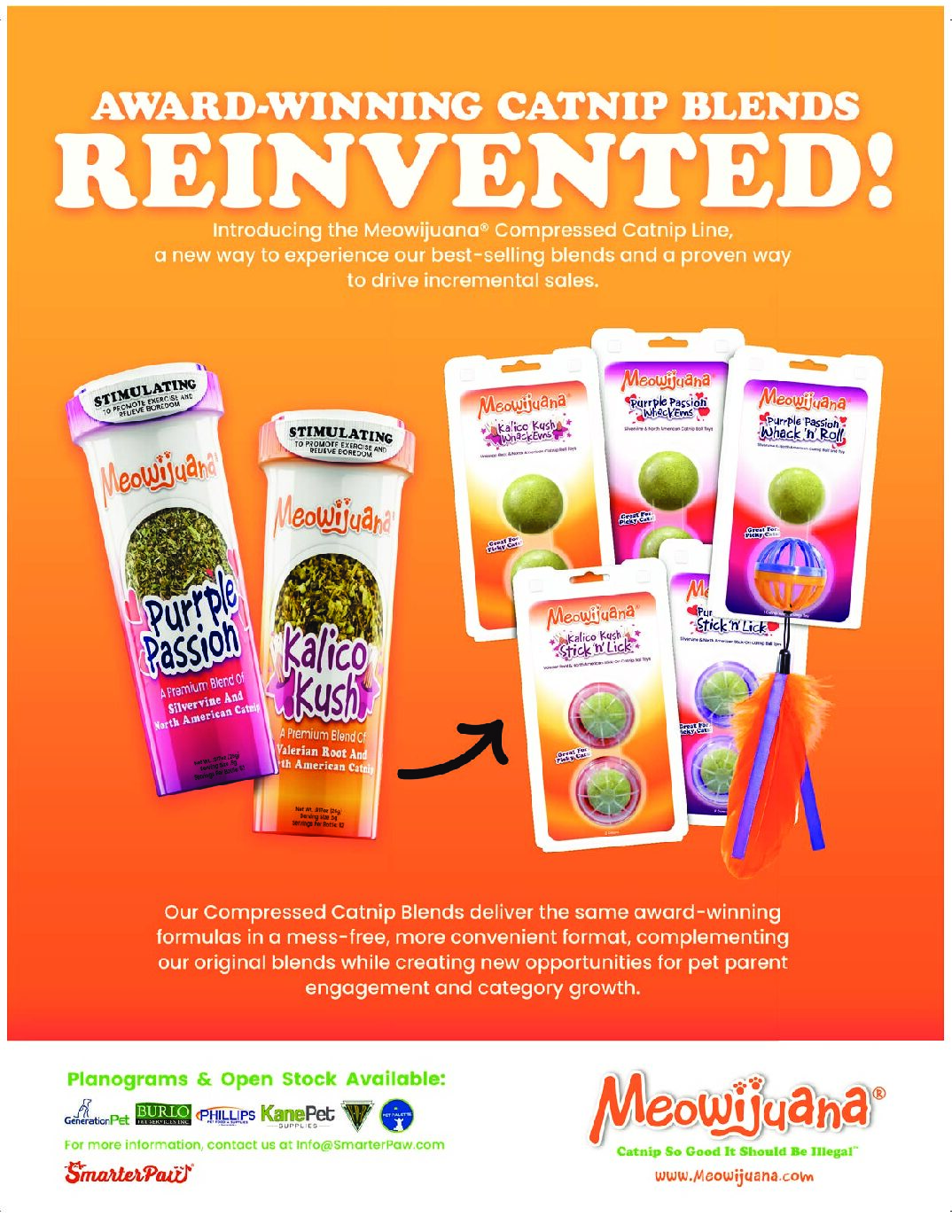
“Over the next five years, SmarterPaw will continue evolving from a product company into a category-building enrichment platform and brand ecosystem and continue to build on our catnip tubes included with all of our plush toys and toys that promote refills of compressed catnip,” said Managing Partner and CEO Scott Ragan. “For Meowijuana, that means expanding beyond traditional catnip into broader feline engagement: catnip blends, silvervine, refillable systems, compressed formats, sprays, lick/play hybrids, and merchandising programs that make the category easier to shop. The biggest change will be the move from ‘catnip as a commodity’ to “catnip as an experience.” The category will be shaped by enrichment, functional sprays, premium sourcing, and refillable/replenishable formats.”
“Over the next five years, Loving Pets will continue evolving by investing in manufacturing innovation and developing solution-based products that meet changing consumer needs. We believe the category will continue shifting toward cleaner ingredients, natural alternatives, and functional treats that support pet wellness and lifestyle needs. Retailers and consumers alike will increasingly prioritize transparency, quality, and value, while innovation in proteins, chew alternatives, and health-focused treats will continue shaping the category,” said Dan Nagy, VP of Sales at Loving Pets.
“We plan to stay true to our core values and will continue to work with human-grade, farm-animal-welfare-certified proteins sourced from US farms and fisheries,” said Campfire Treats President Marko Wittich. “On that foundation, we intend to broaden our offering by adding new treat and chew categories. The facets we expect to see the most change are sourcing transparency and supply-chain accountability. As more brands make ‘natural’ and ‘premium’ claims, the differentiator shifts from the claim itself to whether a company can actually prove it—through certifications, traceable sourcing, and owning its own production.”
“The biggest change at Smalls can be seen through our retail footprint,” said Nate Kredich, COO of Smalls. “Despite our origins as a direct-to-consumer brand, we have placed Smalls in over 900 neighborhood pet doors over the past year. The evolution taking place at Smalls mimics that of today’s consumer: they are unquestionably omnichannel consumers who want to be met where they are. Brands that are natively D2C should be finding ways to support consumers that prefer to shop at retail. At Smalls, customers that opt out of a D2C subscription are presented with options to purchase the product locally, which drives consumers into brick-and-mortar retailers they might not have otherwise found.”
“Over the next five years, we see the future of our company evolving around the development of a fully connected enrichment ecosystem for cats. Our vision is to continue expanding with products intentionally designed for cats, centered on natural instincts, wellness, and recurring engagement, and that complete the hunt cycle with treat rewards,” said Carrie Van Wert, Founder and “Purresident” of Giddy Kitty. “We believe the cat category is moving toward more integrated experiences that combine physical activity, mental stimulation, enrichment, and consumable replenishment. As pet parents continue to humanize their cats and prioritize emotional well-being, we expect innovation in enrichment-focused products to become one of the most influential growth drivers in the category.”
“Over the next five years, I believe the treats category will continue shifting toward ‘better-for-them’ treating, with ingredients like enzymes, postbiotics, and other proactive wellness solutions becoming more integrated into everyday routines,” said Brian Quinn, Vice President of Marketing for Targeted PetCare. “That said, functionality won’t replace indulgence; the emotional connection and enjoyment aspect of treating will always matter. At Targeted PetCare, we’re focused on combining wellness benefits with experiences pets genuinely enjoy. With Chewsday specifically, we see an opportunity to modernize dental treats by making proactive oral wellness feel more approachable, engaging, and routine-driven rather than overly clinical.”
Manufacturers are closely following consumer and retail trends within their categories, recognizing that these trends have the momentum to shape and drive the future landscape. By understanding and addressing up-and-coming preferences and buying behaviors, suppliers can influence the trajectory of their categories by driving product innovation to remain competitive.
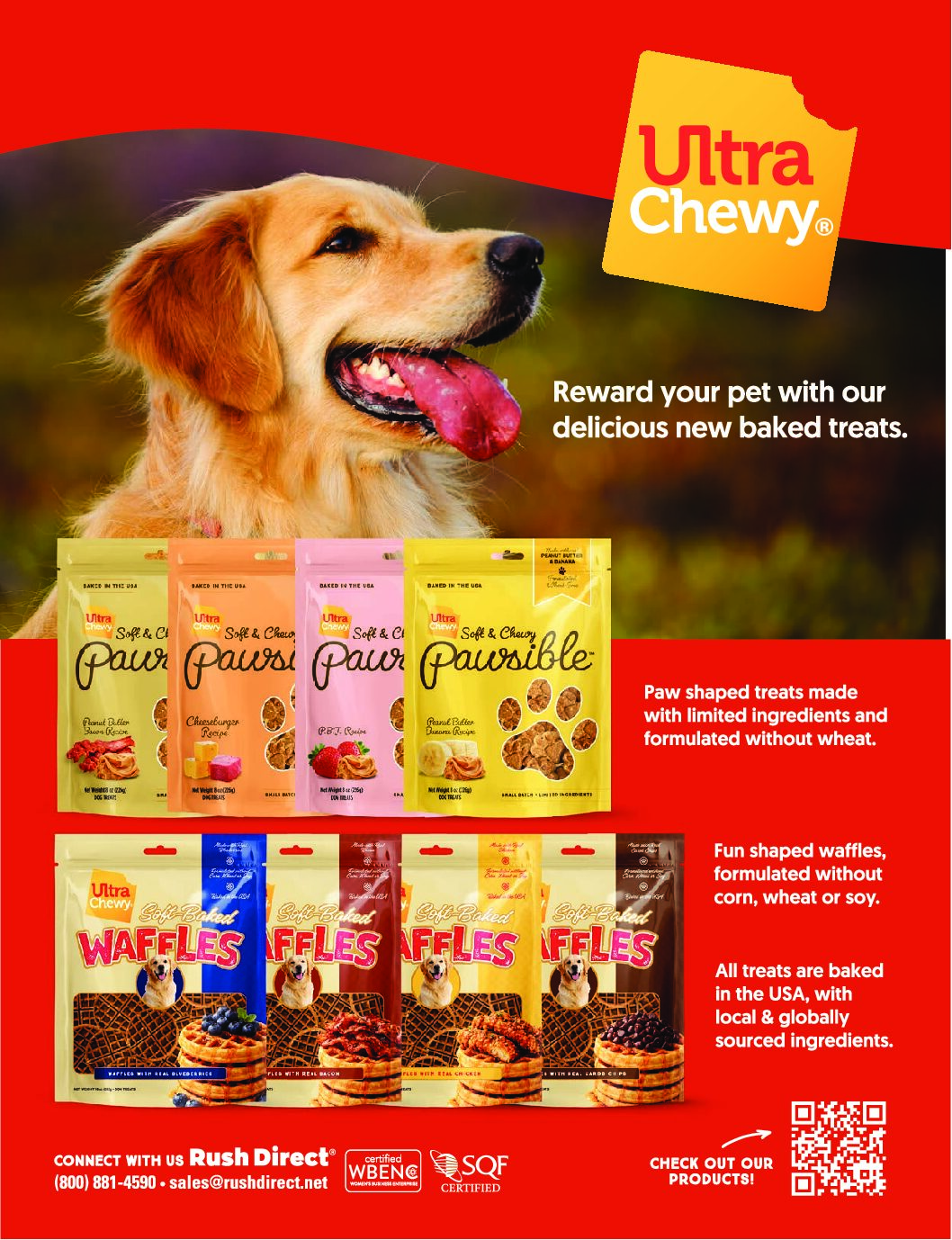
Rod Herrenbruck, Vice President of Sales and Innovation for Rush Direct, believes these trends will continue: “Ingredient quality, protein, and giving treats a humanization in flavor and look. The category will continue to grow; the question is whose brands will participate in this growth.”
“One of the clearest consumer trends is the continued humanization of pets, but with a more intense focus on clean ingredients, a much higher demand for USDA Organic Certified products, and no artificial colors, flavors, or preservatives,” Goldberger with Lord Jameson said. “I believe retail trends will continue to shift toward more curated experiences, elevated services, exclusive retail partnerships, and limited-edition launches that generate excitement and stronger community connections. Consumers are drawn to products and brands that feel personal, meaningful, locally inspired, and purposeful. Retailers are becoming more selective with the brands they bring in. Prioritizing products that offer differentiation, strong branding, customer loyalty, eye-catching packaging, and products with high palatability, and of course, great brand customer service.”
“We are seeing increased interest in a wider range of proteins as pet parents are looking for variety and ways to make mealtimes more exciting and less repetitive, while also better supporting pets with sensitivities,” Menten with Pure Treats Primal Pet Foods said. “In addition, interactive and engagement-based products are becoming a growing trend, as pet parents look for more engaging and fun ways to interact with their pets. From a consumer spending perspective, as mentioned, we are seeing more intentional purchasing behavior, where pet parents are being more mindful of overall household spending but are still choosing to prioritize their pets’ health and wellbeing.”
“Consumers are armed with more knowledge, and they do their homework before making a purchase,” Pasco with All American Pet Manufacturing said. “This is positive for our brands because that knowledge helps to sell our products. Consumers do their homework before making a purchase, and I feel that it will help to eliminate the brands that cut corners. This is positive for our brand because every product we produce is made with the same high-quality ingredients—one product at a time!”
“What we see consistently is that consumers respond when the category is made clear, fun, and easy to understand,” said SmarterPaw’s National Sales Director Mike Bateman. “Cat parents want products that show an obvious benefit: excitement, play, calming, bonding, or routine. Retailers want the same thing from a business standpoint: fast education at shelf, strong turns, clean merchandising, and products that do not require a lot of staff explanation. Industry reporting supports the same direction. Cat-focused offerings still have meaningful runway, especially as cat households have grown while dog households have faced pressure in recent years. That matters because retailers have historically overbuilt around dog while underdeveloping the cat aisle.”
“From what we’re seeing, pet parents are increasingly looking for treats with simple ingredients, natural alternatives, and clear benefits for their pets. There is also growing demand for products inspired by trends in human food, especially around protein, wellness, and ingredient transparency. Over the next five years, we expect the category to continue moving toward higher-quality, purpose-driven treats that balance innovation with affordability. Retailers are also looking for products that create strong consumer demand while offering differentiation within a crowded market,” said Nagy of Loving Pets.
“We expect the ethics- and mission-driven segment to remain a niche within the overall dog and cat treat category,” Wittich with Campfire Treats said. “We do, however, expect this niche to outperform the growth of the broader pet treat market over the next five years, and we see the same pattern in the all-natural, premium segment more generally. Part of this is pet humanization—owners applying the same standards to their pets’ food that they apply to their own. But the customers who drive our segment go a step further: they care not only about their own pet, but about the welfare of the farm animals in the supply chain. That conviction runs deep.”
“Treating has evolved over time from a reward occasion to a bonding moment between pet and pet parent,” said Kredich of Smalls. “The ‘reward’ framework put less value on the quality of that treat, so long as it was something desired by the dog or cat. As pet owners start to skew younger (Gen Z, Millennials) who think of their pet as a member of the family, it’s no longer enough to feed a treat that tastes good. As with food, these consumers want to understand the ingredients and process behind the treats they’re using to bond with their pet. As a result, ‘better-for-you’ options (e.g., limited ingredient / natural / minimally processed / functional) will continue to grab share, starting to crowd out the value end of the treat market.”
“From our research, one of the biggest trends shaping the pet treats category is the growing demand for products that deliver both nutrition and enrichment. Consumers are no longer looking at treats as simple rewards; they want treats that support engagement, mental stimulation, and overall wellness, especially for indoor cats. We’re also seeing consumers place greater importance on products that create ongoing engagement rather than passive consumption. Pet parents increasingly want purchases that deliver multiple forms of value: entertainment, enrichment, wellness, and bonding all within one experience,” said Van Wert of Giddy Kitty.
“At Targeted PetCare, we invest heavily in consumer and shopper research because understanding how pet parents shop and make decisions is critical in today’s environment,” Quinn said. “Consumers are looking for transparency, emotional connection, functionality, and clear value, especially as economic pressures continue influencing behavior. Our research shows pet parents want products that fit naturally into everyday routines while still creating a rewarding treating experience. We’re also seeing how important packaging, shelf communication, and brand building have become in a crowded category. Consumers shop quickly, so brands need to create immediate trust, confidence, and clear differentiation at shelf.”
Manufacturers in the pet industry have a lot to look forward to and are eager to share their advancements and solutions with retailers and pet parents. These developments are intentionally designed to drive category growth and strengthen the bond between not only pets and their owners, but the ties owners have with retailers.
“We will continue to focus on redefining and reimagining what pet treats can look, taste, and feel like through elevated product and package designs, thoughtful clean, organic ingredient statements, and storytelling-driven product launches that create community and a sense of meaning,” Goldberger with Lord Jameson said. “I also see a major opportunity to bring more creativity and innovation to the category. While much of the industry still competes on flavor or format alone, I believe the future will be shaped by brands that create unique flavor profiles, innovative design, shapes, and sensory-oriented products with a deeper emotional connection.”
“On the horizon, we continue to focus on bringing innovation to the dog and cat treat category in ways that are exciting for pet parents and pets,” Menten with Pure Treats Primal Pet Foods said. “One example is our upcoming Wild PureBites Herring launching on June 15, 2026. These large, wild-caught herring treats are made fresh and pure using a delicate freeze-drying process that helps preserve raw whole food. Made with only 1 simple, exotic human-grade ingredient: 100 percent pure wild-caught herring. Larger herring fish are ideal for big dogs or longer chewing, creating a satisfying and engaging treat experience.”
He continued, “We are also expanding our holiday offerings with PureBites Advent Calendars for both dogs and cats. Across both PureBites and Primal Pet Foods, we are always developing new ideas that stay true to our focus on limited-ingredient, high-quality nutrition while continuing to bring variety, innovation, and differentiation to the category.”
“We have a new line of Wild About Dog Pate wet foods hitting the market in the near future,” Pasco with All American Pet Manufacturing said. “They are a super-premium dog food with the No. 1 ingredient being the protein. We are working on a few new items that will be revealed later this year.”
“One thing I think the industry still underestimates is how important emotional connection and product experience are becoming,” said Quinn with Targeted PetCare. “Texture, chew engagement, and daily rituals matter just as much as functional claims. Pet parents want products that deliver benefits while still feeling rewarding and enjoyable for their pets. At Chewsday, we’re focused on more proactive approaches to oral wellness through enzyme-powered solutions that support long-term oral health earlier in the cycle. We also believe there’s significant runway for brands that can bring best-in-class functionality and modern branding to market at affordable, everyday price points. We see a similar opportunity with Country Kitchen, especially as consumers continue looking for trusted, comforting products that balance quality and value.”
“At Loving Pets, we continue to focus on innovation that combines quality, affordability, and functionality. We see a strong long-term opportunity in natural chew alternatives and products that deliver meaningful benefits beyond simply treating occasions. We also believe the category will continue evolving toward more lifestyle-oriented products inspired by human food trends, while still meeting the practical needs of retailers and pet parents alike. Our focus remains on anticipating trends while ensuring products are accessible, compliant, and truly beneficial for pets,” said Nagy at Loving Pets.
“I’ll be candid: I don’t think our read on the category is fundamentally different from that of any other company doing its homework,” Wittich with Campfire Treats said. “The major trends —premiumization, functional benefits, transparency—are visible to everyone. What I’d argue is less common is the willingness to act on them at full cost. We were the first pet or human food company in full compliance with the Better Chicken Commitment, and we hold Certified Humane, Global Animal Partnership, and Marine Stewardship Council certifications. The insight isn’t secret; the commitment to live by it, even when it’s the harder and more expensive path, is where the real difference shows up.”
“For cats, we have been excited to see the growth in single-ingredient, whole food treats. We have some very exciting innovation coming later this year that will offer innovative options for those consumers looking for better-for-you options in this category,” reported Kredich of Smalls.
“What we see coming is the rise of catnip as a format-driven category, not just an ingredient,” Ragan with SmarterPaw said. “The next wave is not simply better catnip—it is better delivery systems. Compressed catnip, refillable toys, sprays, blends, and interactive formats all give retailers more ways to merchandise the same core consumer desire: ‘I want to make my cat happy.’”
As pet parents continue to seek products that deliver wellness, enrichment, transparency and emotional connection, manufacturers are positioning treats and enrichment products as more than simple rewards. The brands that can combine clear benefits, thoughtful innovation and everyday accessibility will be best positioned to shape what’s next.